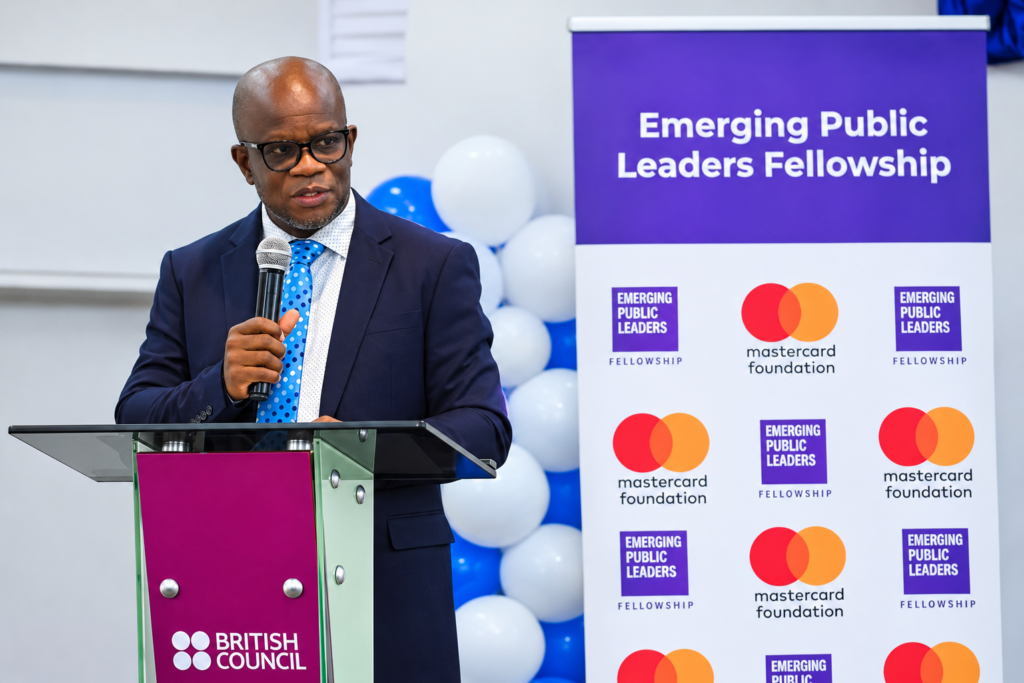
As artificial intelligence (AI) continues to reshape education, school leaders in Ghana are being called upon to balance the opportunities of emerging technologies with their responsibility to protect learners.
That balance took centre stage at the British Council Partner Schools Principals’ Forum in Ghana on Wednesday, 18 November 2026, at the British Council Accra auditorium.
Held under the theme *’Responsible Use of AI in the School Environment’*, the Forum brought together school leaders and education stakeholders to exchange insights and explore practical approaches to ensuring technology enhances learning outcomes while keeping learners safe.
From supporting teaching and learning to improving access to educational resources, AI offers significant potential. However, its growing use in schools also raises important questions about digital safety, data privacy, ethical practice and the protection of children.
AI and safeguarding
A key highlight of the Forum was a panel discussion examining the intersection between responsible AI adoption and safeguarding in schools.
The discussion explored how school leaders can establish appropriate safeguards around the use of AI, address emerging digital risks and create safe, inclusive and supportive learning environments, both online and offline.
As technology evolves, safeguarding concerns are increasingly extending beyond the physical school environment. Risks such as online grooming, cyberbullying, harassment, coercion, impersonation and AI-generated sexual imagery present new challenges for schools, requiring proactive approaches to child protection and clear systems for identifying and responding to concerns.
Global Safeguarding Toolkit spotlight
To support schools in strengthening their safeguarding systems, the British Council has developed its Global Safeguarding Toolkit, with support from UNICEF Spain.
Drawing on more than 15 years of British Council safeguarding practice across over 100 countries, the Toolkit provides a practical, role-based implementation resource to help schools move beyond written policies and establish effective safeguarding practices.
It helps schools clarify staff responsibilities, strengthen recording and follow-up systems, establish shared thresholds for responding to safeguarding concerns and improve reporting and escalation procedures.
It is designed to complement existing school safeguarding policies and adapt to local legal frameworks while supporting consistent safeguarding standards internationally.
The resource has been rolled out across more than 2,500 British Council Partner Schools worldwide, reaching nearly 1.7 million students.
Safeguarding must remain central
Nii Doodo Dodoo, Country Director, British Council Ghana, said safeguarding is fundamental to quality education.
“Safeguarding is fundamental to quality education. As schools increasingly integrate technology and artificial intelligence into teaching and learning, protecting children must remain central to these developments. We want to support school leaders to create environments where every learner feels safe, supported and able to thrive,” he said.
Through the Principals’ Forum, the British Council aims to strengthen dialogue and collaboration among school leaders, recognising their critical role in shaping how emerging technologies are adopted responsibly and how safeguarding is embedded into everyday school practice.
As schools navigate an increasingly digital education landscape, the message is clear: innovation and child protection must go hand in hand.
Schools can access the British Council Global Safeguarding Toolkit starter pack here: https://internationalschools.britishcouncil.org/safeguarding-toolkit-for-schools