A total of 9,849 children were withdrawn from child labour activities across 43 districts in Ghana in 2024, representing a 29 per cent increase from the 7,636 children withdrawn across 50 districts in 2023.
The proportion of children identified as being engaged in child labour who were subsequently withdrawn also increased significantly from 28 per cent in 2023 to 70.3 per cent in 2024, representing an improvement of approximately 150 per cent.
All 9,849 children were withdrawn through Child Labour Monitoring and Remediation Systems (CLMRS) operated by private sector actors within the cocoa industry, highlighting concerted efforts by players in the value chain to eliminate child labour from the sector.
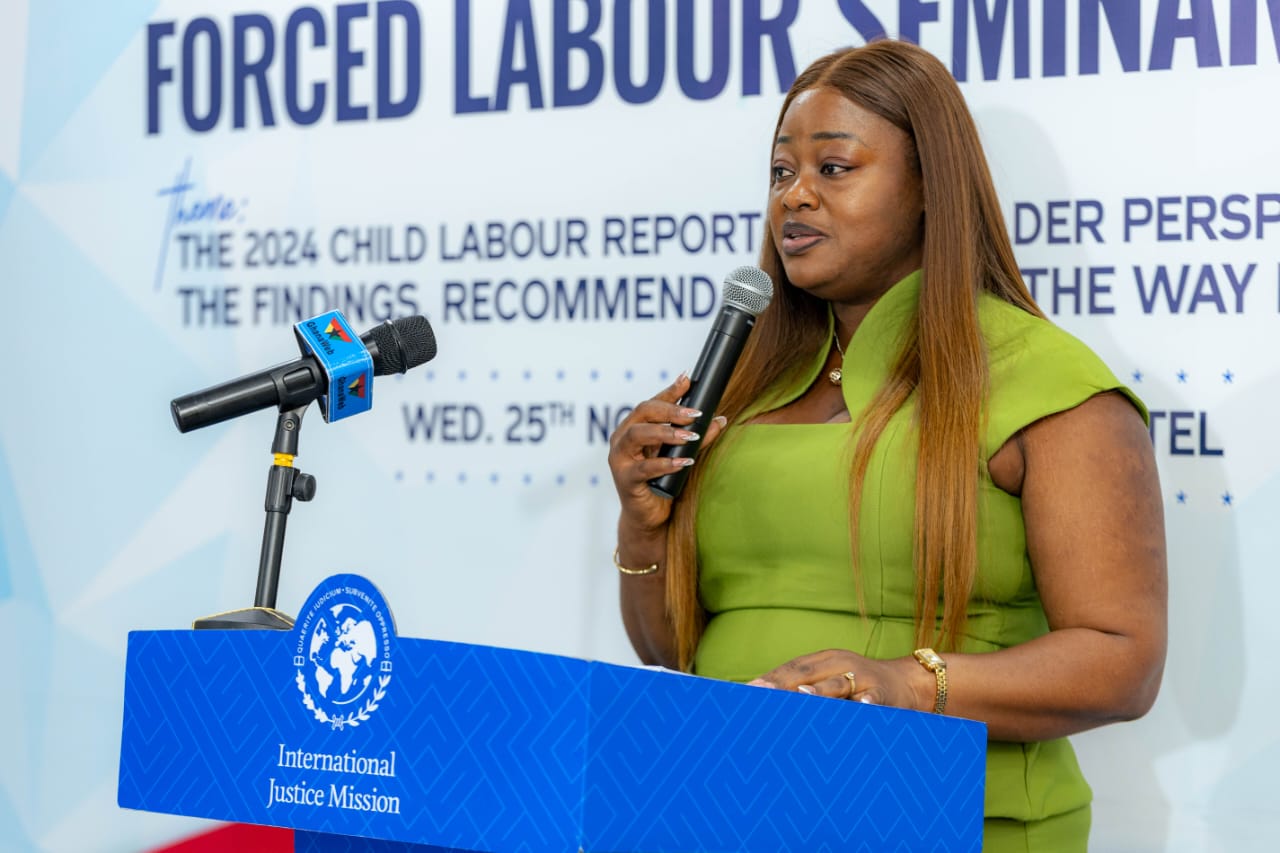
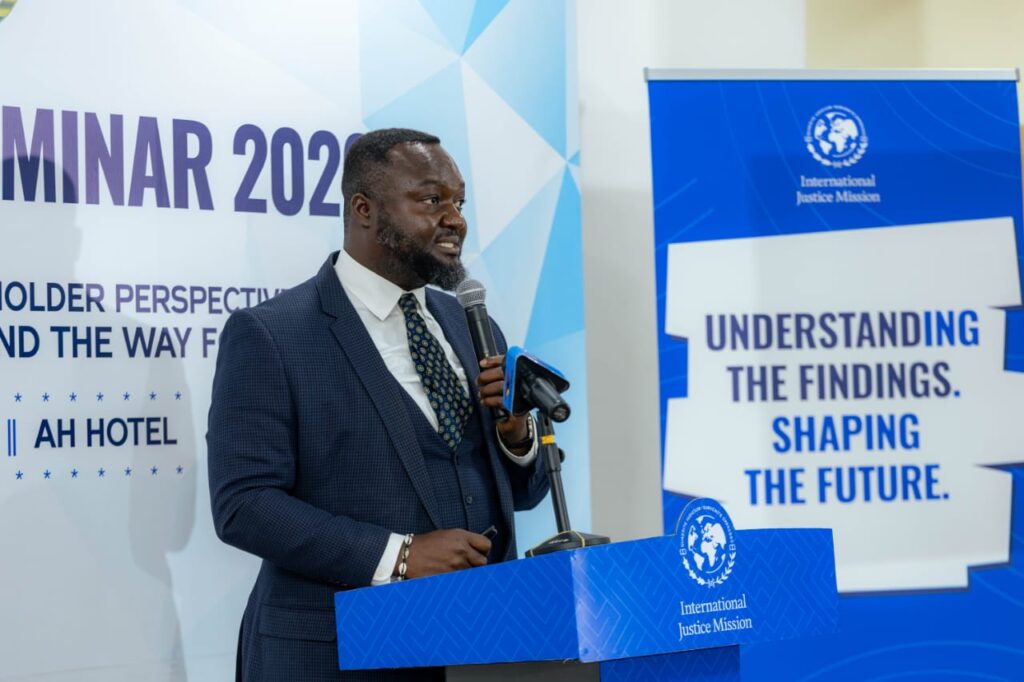
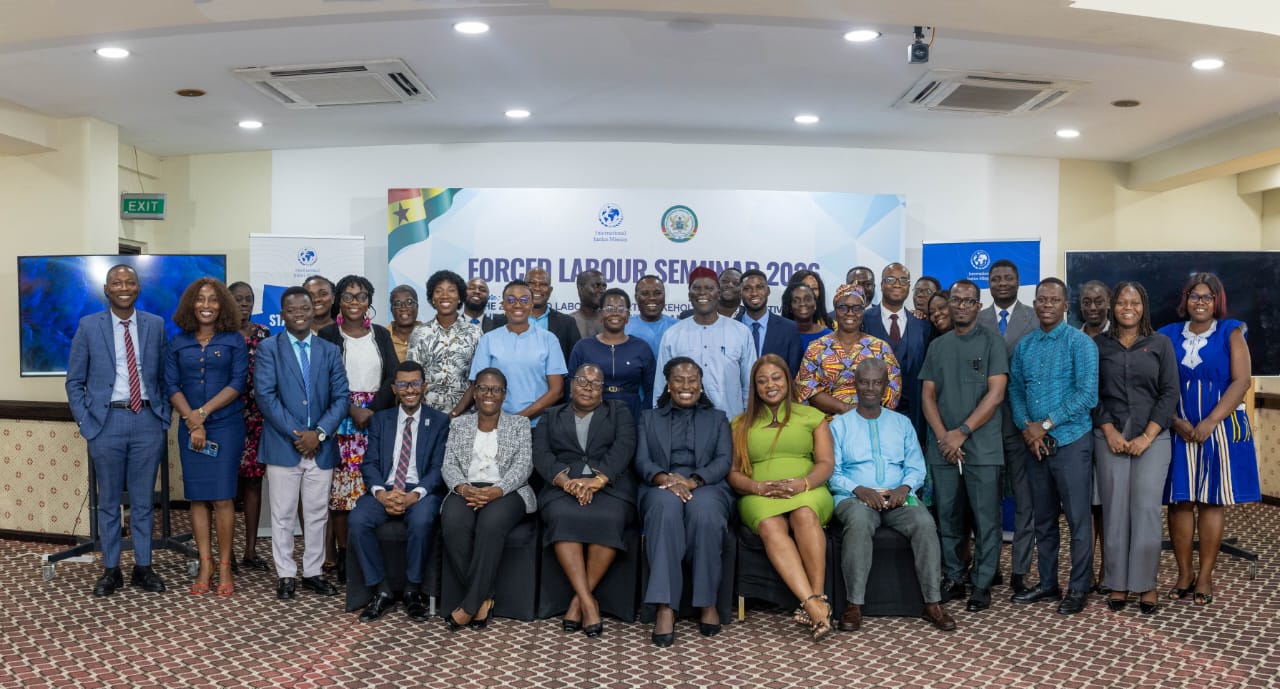
This was contained in the 2024 Annual Child Labour Report produced by the Ministry of Labour, Jobs and Employment and presented to stakeholders in Accra during the 2026 Forced Labour Seminar organized by the International Justice Mission (IJM) on Wednesday, November 25, 2026.
The report also revealed a significant reduction in the number of children identified as being engaged in child labour and its worst forms, although concerns remain over the concentration of interventions within the cocoa sector and declining child trafficking rescues.
Cases Drop
A comparative analysis of the 2023 and 2024 data also reveals that the number of children identified as being engaged in child labour declined from 27,139 in 2023 to 14,014 in 2024, while the number of children identified as being engaged in the worst forms of child labour (WFCL) declined from 4,541 in 2023 to 1,522 in 2024.
The reductions, coupled with the increased proportion of children withdrawn from child labour, point to improvements in Ghana’s recorded efforts to combat the practice.
Districts
Presenting the findings of the report, Emmanuel Antwi Bosiako, a consultant with the Ministry, disclosed that the five districts with the highest recorded numbers of children engaged in child labour were Asunafo South, Sefwi Akontombra, Bekwai Municipality, West Akim Municipality and Bia West District, respectively while Ellembelle, Amansie West, Ahafo Ano South East, Tarkwa Nsuaem and Twifo Atti-Morkwa were identified as the five districts with the highest recorded numbers of the worst forms of child labour.
Meanwhile, the five districts that recorded the highest numbers of children withdrawn from child labour were Asikuma-Odoben-Brakwa, Ahafo Ano North Municipality, Asunafo South, West Akim Municipality and Adansi South District.
Of these, only Asunafo South and West Akim Municipality appeared among the five districts with the highest recorded numbers of children engaged in child labour.
None of the five districts with the highest recorded numbers of children engaged in the worst forms of child labour appeared among the five districts with the highest numbers of children withdrawn.
Male Children Most Affected
The report revealed that males constituted 58 per cent of children identified as being engaged in child labour and 70 per cent of those engaged in its worst forms with an overwhelming majority of the affected children being between the ages of 15 and 17, highlighting concerns about the involvement of adolescent boys in exploitative and hazardous economic activities.
Also of the 9,849 children withdrawn from child labour, 59 per cent were males, while 41 per cent were females.
The report noted that the distribution of withdrawals broadly aligned with the gender distribution of children identified as being engaged in child labour and its worst forms.
Approximately 71 per cent of males identified as being engaged in child labour were withdrawn, compared with 69 per cent of females.
Younger Children
The report further revealed significant variations in withdrawal rates across the different age categories.
While 83 per cent of children aged between 15 and 17 years who were identified as being engaged in child labour were withdrawn, the corresponding figure for children aged between 13 and 14 years was 77 per cent.
However, only 52 per cent of children aged between five and 12 years who were identified as being engaged in child labour were withdrawn, a development which could be attributed partly to the greater number of children within that age category engaged in child labour and its worst forms.
The report, however, highlighted that although more children aged between five and 12 years were identified as being engaged in child labour and its worst forms than those aged between 13 and 14 years, more children in the latter category were withdrawn, raising concerns about the effectiveness of interventions targeting younger children engaged in child labour.
Cocoa Industry
The report indicated that all 9,849 children withdrawn from child labour in 2024 were withdrawn through Child Labour Monitoring and Remediation Systems operated by private sector actors within the cocoa industry, highlighting the contribution of private sector investments and established monitoring mechanisms towards efforts to ensure a child-labour-free cocoa value chain.
Mr Antwi Bosiako, however, expressed concern about the concentration of monitoring and remediation systems within the sector, explaining that the appreciable level of investment in anti-child labour interventions and the existence of established systems for addressing the practice had resulted in the report being disproportionately skewed towards the sector.
He stressed that considerable efforts were required in other priority sectors through stakeholder consultations, public sensitisation and the development of targeted strategies to address child labour.
Child Trafficking
Despite the improvements recorded in child labour withdrawals, the report revealed a decline in the number of children rescued from trafficking.
The Ministry of Gender, Children and Social Protection reported identifying and rescuing 320 children from child trafficking in 2024, compared with 534 in 2023, representing a reduction of 214 children. Of the 320 children rescued in 2024, 66 per cent were males.
The report also noted that the declining number of rescues appeared to reinforce the need for strengthened resource mobilisation to ensure a sustained response to human trafficking.
Remediation Services
Beyond withdrawing children from exploitative activities, the report highlighted efforts to provide remediation services to address the underlying causes of child labour and prevent its recurrence.
A total of 10,324 children benefited from various remediation services in 2024, with educational support and counselling constituting the main forms of assistance.
Of this number, 7,643 children, representing approximately 74 per cent, benefited from the provision of school kits, while 4,058 children, representing 39.3 per cent, received counselling services.
Additionally, 1,205 children, representing 11.7 per cent, benefited from menstrual hygiene management support.
Other interventions included the provision of school bags to 159 children, shoes to 11 children and school uniforms to 287 children.
The report emphasised that effective remediation was essential to addressing the root causes of child labour, strengthening families, improving community resilience and preventing children from returning to exploitative activities.
It further stressed the importance of developing robust remediation plans informed by proper assessments of the needs of affected children and their families.
Sustainable Change
Commenting on the report, the Director of International Justice Mission’s (IJM) West Africa Programme, Anita Budu, noted that the relevance of the data lay in its ability to inform sustainable change and shape national conversations on child labour.
She explained that while children were permitted to engage in certain forms of work, the law distinguished between permissible child work and child labour, necessitating increased public awareness of the distinction.
Ms Budu noted that child labour exposed children to exploitation, deprived them of access to education and healthcare, and placed them in harm’s way.
She consequently called on stakeholders to collaborate in addressing the practice and ensuring that interventions translated into meaningful and sustainable improvements in the lives of affected children.
Meanwhile, the Director of the Child Labour Unit, Esther Ofori Agyemang, has disclosed that the 2025 Annual Child Labour Report is ready and will soon be made available to stakeholders, explaining that the forthcoming report highlighted marked improvements in Ghana’s efforts to combat child labour compared with the findings of the 2024 report.