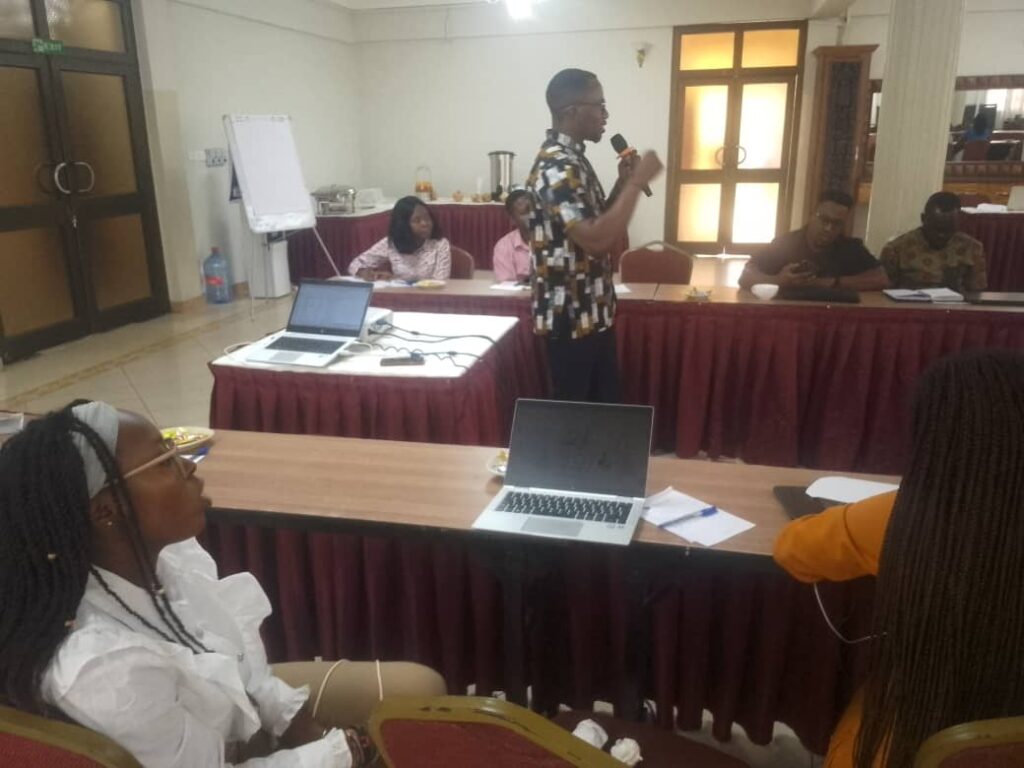
In a bold step towards confronting Ghana’s escalating plastic pollution crisis, key stakeholders including environmental advocates, government agencies, private sector players, and community leaders converged at the Coconut Grove Hotel in Accra for a high-level multi-stakeholder roundtable discussion on single-use plastics. Themed *“Pathways Towards Ending Plastic Pollution,”* the dialogue brought together diverse voices committed to tackling the menace of plastic waste, with a particular focus on single-use plastics.
Organized by the *Ghana Youth Environmental Movement (GYEM)*, the roundtable marked a significant milestone in the organization’s five-year campaign to ban single-use plastics in the country.
“This dialogue is part of our ongoing advocacy to end the use of 10 major single-use plastic items – from plastic bottles and straws to cups and sachets,” said *Glory Emmanuella Appiah*, Acting National Coordinator of GYEM. “We’ve seen promising signals from government, such as the EPA’s commitment to restrict plastics at airports and supermarkets, and a presidential announcement on banning styrofoam production. This meeting is about bringing all key players under one roof to define how we can collectively translate those statements into action.”
Participants included representatives from the Environmental Protection Agency (EPA), market women from Kaneshie, producers of sustainable alternatives, civil society organizations, and waste management companies, including *Coliba Waste Management*.
Speaking to the media, *Isaac Ofosu*, General Manager at Coliba, emphasized the need for a united front in the fight against plastic waste.
“If we leave this to government alone, we won’t get far,” Ofosu said. “We must collaborate, not just talk. Ending single-use plastics can create economic opportunities too—through recycling, repurposing, and innovation. We can turn plastic waste into bricks, roofing materials, or chairs. But it starts with a change in behavior and mindset.”
The dialogue also highlighted the broader environmental and public health consequences of plastic waste. Choked gutters, ocean pollution, and microplastics in food and water are just some of the dire outcomes cited by the speakers.
Spencer Awortwi, Project Coordinator at *Plastic Punch*, underscored the urgency for data-driven action and coalition-building.
“This issue is bigger than any one organization,” Awortwi stated. “We need to move beyond talk shops. At Plastic Punch, we’re ready to collaborate on media campaigns, policy advocacy, youth engagement, and research. The goal isn’t to keep fighting plastic pollution—we want to win this fight.”
Awortwi shared insights from Plastic Punch’s work with schools, including challenges in waste segregation efforts due to poor infrastructure and inefficiencies in the waste management system. He also cautioned against over-reliance on recycling as a silver bullet, stressing the need for reduction and alternative solutions.
GYEM’s Appiah reiterated that the roundtable was not about assigning blame but about shaping a practical and inclusive roadmap toward a plastic-free Ghana.
“Our communities are bearing the brunt of this crisis—from floods to health hazards. We’ve done the research. It’s clear: single-use plastics are at the heart of the problem. Now, we must act together,” she said.
The event concluded with a renewed commitment from all stakeholders to deepen collaboration, drive public education, and push for policy enforcement and innovation in sustainable alternatives. Participants also endorsed the idea of forming a *national coalition on single-use plastics*, led by GYEM and open to partners across sectors.
Key Takeaways from the Roundtable:
*lGYEM marks five years of advocacy for a national ban on 10 single-use plastic items.
EPA and the Presidency have signaled upcoming policy actions, including banning styrofoam and regulating plastic use in public spaces.
Stakeholders call for cross-sector collaboration, practical alternatives, and public education.
Coliba and Plastic Punch stress the need for behavioral change, innovation, and accountability in waste management systems.
A national coalition on single-use plastics is in the pipeline to sustain coordinated action.
Story by Eugene Kwasi Nyarko