Ghana has officially joined the elite group of countries working on the proposed Fossil Fuel Treaty, describing it as a consequential step towards a cleaner energy future that must protect the economic interests of oil and gas producing nations.
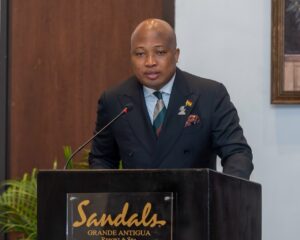
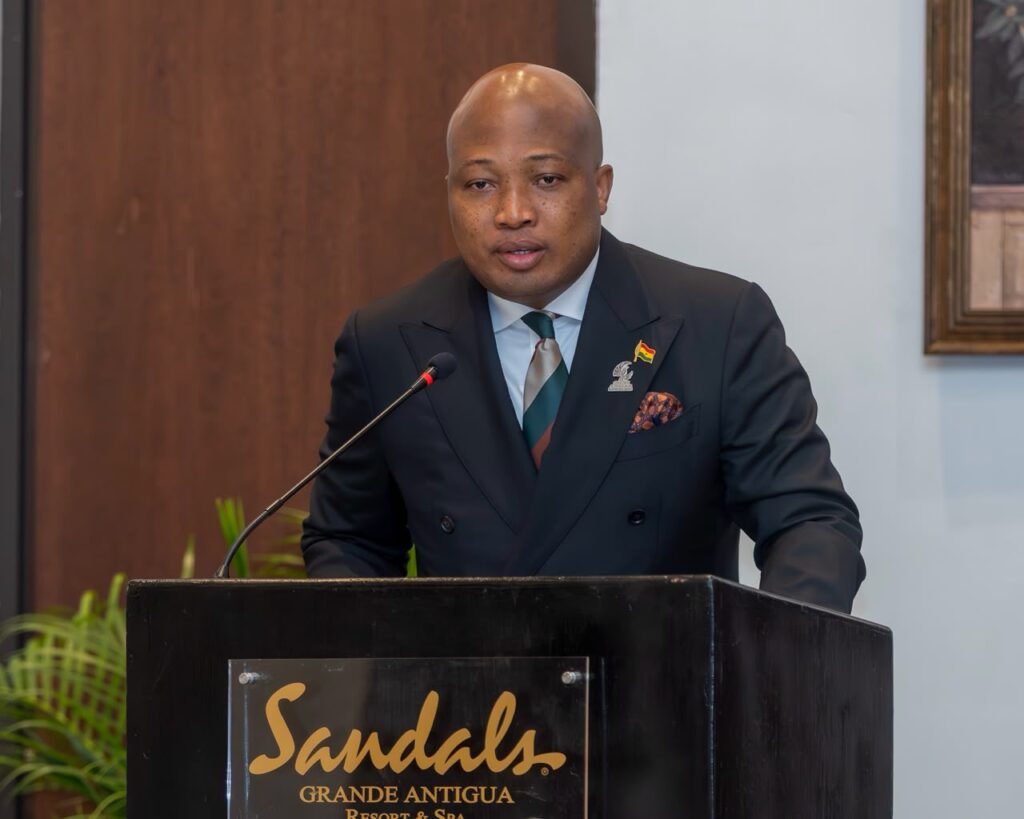
Ghana’s Foreign Minister announced this at a High-Level Breakfast Meeting on the Fossil Fuel Treaty Initiative for Commonwealth Ministers of Foreign Affairs held in St. John, Antigua and Barbuda, on Monday, ahead of the Commonwealth Heads of Government Meeting (CHOGM).
The Minister said Ghana’s decision is inspired by its recent deposit of the instrument of ratification for the Treaty on the Non-Proliferation of Nuclear Weapons at the United Nations on September 26, 2025.
“Even as an oil and gas producing country, we are joining this very elite group of countries to work on this consequential treaty,” the Minister said.
Climate Threat and Ghana’s Reality
He told the gathering that climate change poses a grave threat to human security and sustainable development, with Small Island Developing States like host Antigua and Barbuda facing acute consequences.
While affirming Ghana’s commitment to collective climate action, he stressed that the transition must account for differences in national capacities, energy needs, and historical emissions.
For Ghana, he said, oil and gas has contributed to economic transformation through jobs, foreign exchange, and public revenues. Petroleum receipts channelled through the Annual Budget Funding Amount (ABFA) have supported education, health, infrastructure and renewable energy development.
Natural gas from domestic fields, he added, remains central to electricity generation and the supply of Liquefied Petroleum Gas (LPG) for cooking.
Reset Agenda and Economic Risks
The Minister said Ghana’s approach is informed by President John Dramani Mahama’s reset agenda, which emphasizes economic transformation, industrial diversification, energy security and sustainable development.
He cautioned that while a diversified energy system could create new enterprises, jobs, and support value addition in strategic minerals like lithium and silicon, the risks are equally consequential.
“Investment in petroleum development remains sensitive to global transition policies, regulatory and fiscal conditions and geopolitical uncertainty,” he said.
He warned that inadequate emissions abatement could limit market access, while carbon-related trade measures could undermine the competitiveness of manufactured products.
Ghana’s Four Demands for a Just Treaty
The Minister outlined what a credible Fossil Fuel Treaty must contain for producing economies:
1. Finance: A dedicated and accessible transition financing mechanism, debt restructuring or relief, and grants and concessional lending from multilateral development banks.
2. Technology: Practical and reliable technology transfer, technical assistance and investment mobilization.
3. Infrastructure: Support to retrofit or repurpose oil and gas infrastructure for cleaner energy.
4. People: Human-centered programs – training, economic empowerment and alternative livelihoods – for workers and communities dependent on petroleum.
“Climate justice demands not merely that we pursue a common destination, but that we recognize the unequal circumstances from which nations must undertake the journey,” he stated.
He insisted that a uniform timetable inattentive to national realities “would risk undermining both sustainable development and effective climate action.”
Partnership, Not Prescription
The Minister reaffirmed Ghana’s commitment to the Paris Agreement and to multilateralism, saying the Commonwealth – which brings together climate-vulnerable states and energy producers – is well placed to shape a balanced approach.
He called for discussions on the treaty’s legal and governance arrangements to proceed without prejudging national positions and with full respect for energy sovereignty.
“Ultimately, the global energy transition must be founded upon partnership rather than prescription, cooperation rather than coercion and shared responsibility rather than disproportionate sacrifice. A transition that leaves developing countries behind cannot be truly just,” he concluded.