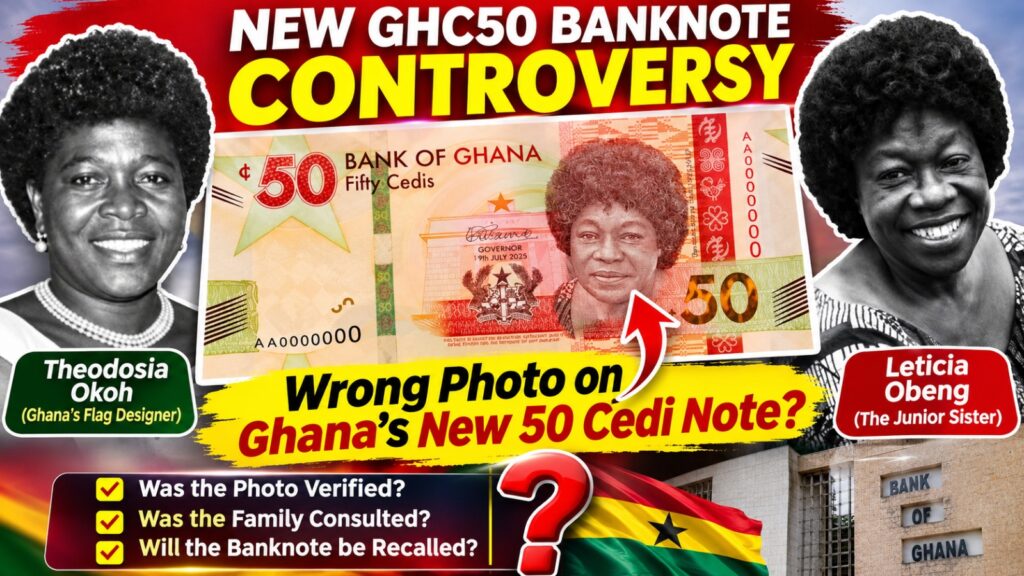
If it is indeed true that the NDC government and the Bank of Ghana mistakenly used an altered or incorrect photograph of the late Madam Theodosia Okoh on Ghana’s new GHC50 banknote, then there are serious questions that demand answers.
1. Was The Photo Made Public Before Production?
Was the photograph intended for the new GHC50 note made public before production? If not, why was there no transparency in the process?
2. Was The Family Consulted?
Could the authorities not have consulted the family of the late Theodosia Okoh to obtain the correct photograph and formally provide it to the officials responsible for the design and production of the new currency? Was this such a difficult step to take that it had to be overlooked?
3. Why Is She Hardly Recognisable?
According to the Bank of Ghana’s explanation, three photographs of Madam Theodosia Okoh, representing different stages of her life, were blended and digitally manipulated to produce the final portrait.
If this is the case, why was the image altered to such an extent that many Ghanaians can hardly recognise the woman being honoured?
4. Who Approved The Final Portrait?
Who was responsible for producing and approving the final portrait, and will they be held accountable for the outcome?
Technical adjustments required for currency printing should never compromise the fundamental facial identity of the person being honoured.
5. Were Other Portraits Also Blended?
Madam Theodosia Okoh is not the only woman whose portrait appears on the new banknotes. Were multiple photographs of the other women also blended and digitally manipulated?
6. Why Does Only Hers Look So Different?
If the same technique was applied to all the personalities, why does Theodosia Okoh’s portrait appear so significantly different, while the identities of the others remain recognisable?
7. Will The Notes Be Recalled?
If the photograph is officially confirmed to be incorrect or improperly represented, will the new GHC50 banknotes remain in circulation, or will the Bank of Ghana recall them for reprinting?
If a reprint becomes necessary, who will bear the cost? This could result in a significant financial loss to the state, and those whose negligence or oversight contributed to this situation must be held accountable. Public funds must not be wasted without consequences.
Conclusion
These are legitimate questions, and the Bank of Ghana owes Ghanaians a clear, transparent and convincing explanation.
Our national currency represents our history, identity and heritage. Honouring national icons must be done with dignity, accuracy and respect. Technical incompetence, poor judgement or a lack of due diligence must never be allowed to undermine the legacy of our national heroes.
By Peter Thompson, Secretary, NPP Finland Branch