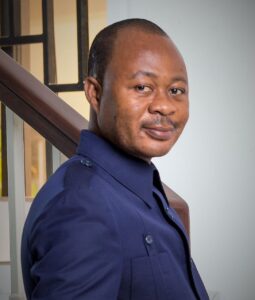
The Author-Nana Kwasi Asuman-Frimpong
This article was first published on on sayitright2016.wordpress.com
Over the weekend, I had the opportunity, on the recommendation of the Secretary-General of the All-African Students’ Union (AASU), Peter Kwasi Kodjie, to co-chair the African Union (AU) Committee at this year’s International Model United Nations Conference.
The conference, “SABYA International Model United Nations Online Conference”, was hosted by the South African BRICS Youth Association (SABYA).
The conference simulated six diverse committees, namely, the United Nations Security Council (UNSC), World Health Organisation (WHO), United Nations Economic and Social Council (ECOSOC), International Labour Organisation (ILO), World Trade Organisation (WTO) and the African Union (AU).
In the wake of the global COVID-19 pandemic and the subsequent hydra-headed challenges, including the changing landscape of doing business and sustaining day-to-day livelihoods, the conference was organised to develop resolutions that could assist policymakers, the labour market and the global economy in operating during and after COVID-19.
The conference had the Deputy Minister of Communications and Digital Technologies of South Africa, Pinky Kekana, as the keynote speaker for the opening ceremony, which took place on Friday, May 29.
Ms Kekana urged the youth to use available opportunities, encouraging them to create opportunities themselves even if none seemed available.
“You must use opportunities, and if you can’t find any opportunity, then create one and take others along. The youth is not the future generation; the youth is the now generation,” she said.
Speakers
Other speakers at the opening ceremony were the Secretary-General of International Model United Nations (IMUN), Fawad Ali Langah, from Pakistan, and the National Spokesperson of the Indian Youth Congress.
The others were Gautam Seth; a representative of the AU Youth Envoy, Nair Abakar, from Chad; and an EXCO member of the All-African Students’ Union (AASU) from Southern Africa, Nauyoma Dimbulukeni from Namibia, who represented the Secretary-General of AASU.
The various committees came up with resolutions that IMUN will make available to relevant stakeholders for action.
Borderless Countries
The conference was attended by delegates, invited guests, ministers of state and other dignitaries from every part of the world. Interestingly, none of the distinguished participants in this hugely successful conference came with a passport, yellow fever vaccination card, visa or hotel bill.
Numbering close to 100 people from various parts of the world, they each participated from their own homes or offices.
Ghanaian theologian and founder of the International Central Gospel Church (ICGC), Dr Mensa Otabil, has stated that the world would never be the same after the novel coronavirus pandemic had been defeated.
Before the uninvited COVID-19 guest came into the world, technology had existed and conferences had been held online. However, the COVID-19 era has opened new vistas of opportunity for the world in terms of communication without huge costs, giving true meaning to media and communication theorist Marshall McLuhan’s “global village”.
The world is now on Zoom, Google Meet, Facebook, WhatsApp, Twitter, Instagram and other communication platforms. Our world is now a small village without boundaries. You do not need a visa to attend a conference in South Africa or Equatorial Guinea now.
When Marshall McLuhan coined the term ‘global village’ in 1964 to describe the phenomenon of the world’s culture shrinking and expanding at the same time due to pervasive technological advances that allow for the instantaneous sharing of culture, he probably did not anticipate that it would become more germane at a time when a global pandemic would afflict the world and make nonsense of other self-imposed terminologies, such as ‘world superpowers’, that have been used to ‘bully’ so-called ‘Third World countries’.
From Akyem Oda
“Honourable Delegates,
Welcome to the 2020 Model United Nations Conference… We are thrilled to be directing the African Union at the conference. While much of the world criticises the African Union (AU) for its inability to engage in rapid testing during this pandemic, we strongly believe that regional bodies, such as the AU, can provide solutions to these global and local problems. African countries are at a turning point in their histories during this pandemic. Ironically, they are also on the cusp of making genuine political progress.
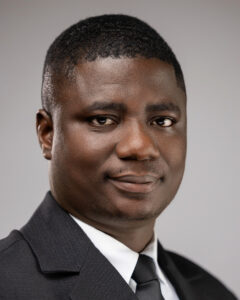
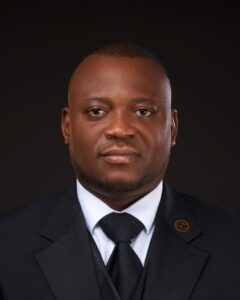
It is other African countries that can help their neighbours achieve this new sense of development. We, Julius Iyere, Chiemela Samuel and Nana Kwasi Asuman-Frimpong, are delighted to serve you as Chairs of the African Union at the upcoming conference, and we are sure this will be time well spent, with plenty of experiences to share.”
These were the opening remarks of the three Chairs of the AU Committee.
Leading delegates from almost every part of Africa from my small room in a small community in the eastern part of Ghana, Akyem Oda, together with my colleagues and using Zoom and WhatsApp, we were able to manage a successful committee.
Since March, when the President placed a ban on public gatherings and closed down schools, forcing me to leave campus at the University of Ghana and return home, I have been working from home.
I have been writing stories, granting interviews, editing content, proofreading and approving designed pages, all from home. Using various social media platforms, I have been able to create a harmonised and conducive working environment with my colleagues and bosses, getting the job done without hitches, all from home.
The New World and Africa
Like it or not, this is the new world in which we now find ourselves. We now live in a single country without borders. This new world has come to stay. It is now time for Africa to fit into it. As President Nana Akufo-Addo keeps saying, the pandemic has exposed many of the lapses in the world, Africa and Ghana. It is up to us to fix them and fit in.
The new world has its own challenges. Telecommunication companies can frustrate the hell out of you. The world is now moving towards 5G, while many of our localities are still struggling with 3G.
Africa cannot and should not go back cap-in-hand, looking for support from other parts of the world after COVID-19. We were able to shut our borders to the world. We were able to deport nationals of superpower countries during the pandemic. The pandemic has given us the opportunity to realise that our survival is not dependent on anybody. We can do our own things. Kwame Nkrumah was right when he said that the Black man is capable of managing his own affairs.
African leaders and Africans must develop our own technology that suits our context. Many innovations have emerged from Africa since the pandemic broke out, and we have a duty to make use of these innovations.
The new normal is that huge conferences can still be held without thousands of people in physical attendance; there is no need to waste time and money constantly travelling for conferences. The new normal is that office space is just a building that is not necessarily required to get the job done. The new normal is that you do not need to be at a hospital to receive medical care, as demonstrated by the Ghanaian-made virtual hospital, Hewale. You do not need to be in a physical classroom to receive an education. The new normal is that there are now no boundaries in the world.
Let us accept this truth and get it all done.
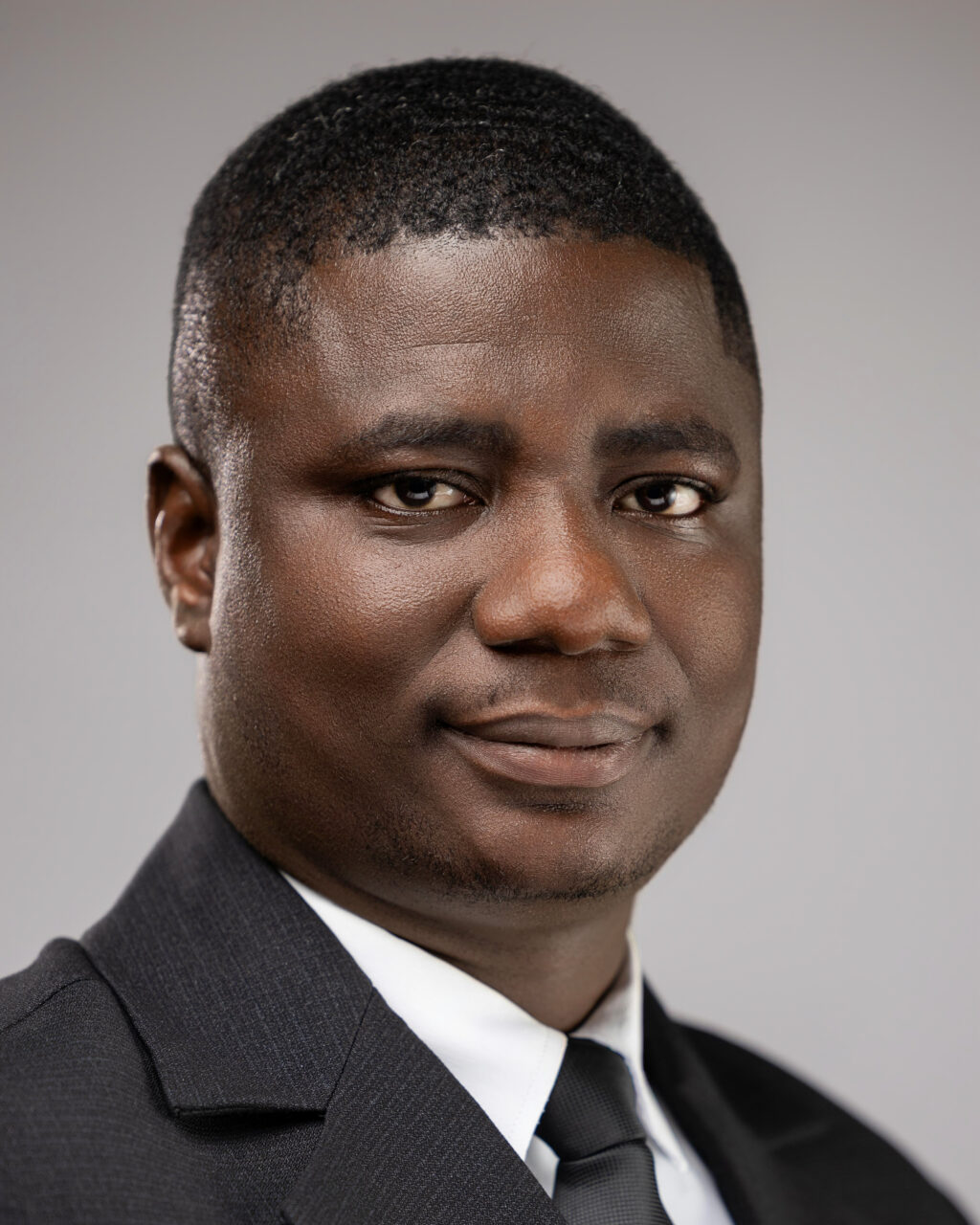
The author is the General Secretary of the Graduate Students’ Association of Ghana (GRASAG National) and a Master of Arts (Communication Studies) student in the Department of Communication Studies at the University of Ghana.