Introduction
When more than 10,000 international delegates converge on Accra alongside tens of thousands of worshippers, the significance of the gathering extends far beyond the pulpit. For Ghana, the 10th Triennial World Assemblies of God Congress (#WAGC2026) represents not only a major moment in the history of the global Pentecostal movement, but also an opportunity to generate economic activity, create livelihoods, showcase Ghanaian culture and strengthen the country’s capacity to host major international events. Its significance must therefore be assessed not only in spiritual terms, but also by the tangible benefits it can deliver to ordinary Ghanaians and the demands it places on public institutions.
WAGC 2026
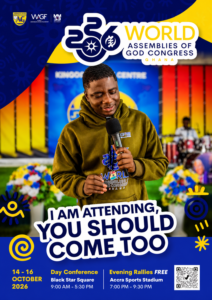
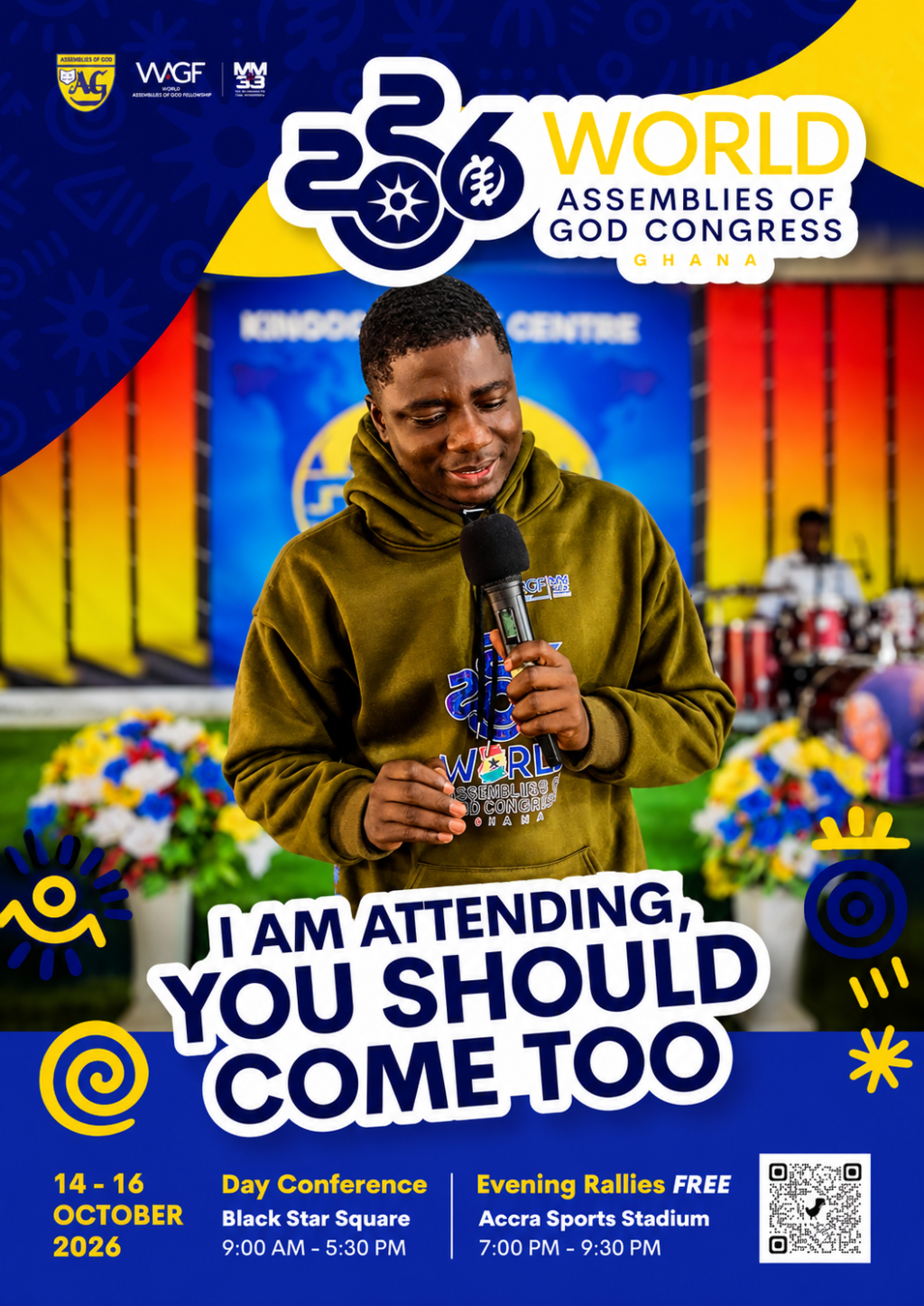
From Wednesday, 14 October, to Friday, 16 October 2026, more than 10,000 pastors, ministers and delegates from over 100 countries will converge on the Accra International Conference Centre for the Congress, which will be held under the theme “Commissioned: One Mandate, Every Nation.” In addition to the international delegates, approximately 40,000 church members are expected to converge at the Accra Sports Stadium every evening during the same period for what could arguably be one of Ghana’s biggest global church events.
The Congress comes at a time when the Church has launched its Mission 2033, which aims to plant one million churches by 2033, marking the 2,000th anniversary of the events surrounding Jesus Christ’s crucifixion, resurrection, ascension and the subsequent Day of Pentecost.
Attendance
Among those attending the event are Rev. Dominic Yeo, the Global Chairman of the Assemblies of God; President John Dramani Mahama, the first member of the Assemblies of God Church and the first Pentecostal to become president of a country; Dr Lazarus McCarthy Chakwera, former President of Malawi and the first Assemblies of God pastor to become president of a country; Bishop Dag Heward-Mills, Founder and Presiding Bishop of the United Denominations Originating from the Lighthouse Group of Churches (UD-OLGC), a church affiliated with the global Assemblies of God movement; Rev. Doug Clay; Rev. Juan Carlos Escobar; and other international ministers with Rev. Stephen Yenusom Wengam, General Superintendent of Assemblies of God, Ghana, as the Chief Host.
Musicians from across the globe are expected to perform at the event, alongside an approximately 500-member mass choir, arguably one of the largest mass choirs assembled for a denominational event. More than 1,000 church volunteers, working alongside state security, intelligence and health personnel, as well as diplomats, nutritionists and tourist guides, are earmarked to perform various tasks during the Congress.
Additionally, more than 200 hotels and hospitality centres have reportedly been booked for the event, making it one of the biggest international events in Ghana’s history. The Motor Transport and Traffic Directorate (MTTD) of the Ghana Police Service has issued traffic directives to motorists whose journeys may be affected by the event, underscoring the scale of the Congress and its implications for the country.
Implications
Beyond its spiritual significance to the Assemblies of God Church and Ghana’s Christian community, the Congress has significant social, economic and cultural benefits, while presenting important considerations for public health, sanitation and national security.
Social Implications
The Congress offers opportunities for religious networking, leadership development, knowledge exchange and international cooperation. Ghanaian pastors and church leaders can establish relationships with their counterparts from other countries, exchange experiences in church administration and community development, and explore partnerships that may continue beyond the event. The rally at the Accra Sports Stadium, which is open to Christians from different denominations, also provides fellowship opportunities and shared experiences, and the event could also encourage voluntary service and community engagement through the participation of local congregations and volunteers.
Participating in the organisation and management of an international gathering of this scale further offers practical learning opportunities for Ghanaian volunteers and workers, helping them acquire skills in event management, customer service, logistics, communications, teamwork, crowd management and international protocol. For young people, this experience could strengthen their prospects of securing future employment in hospitality, tourism, administration and event planning.
Although Ghana has hosted several major international events, including the 2023 All African Games, the 2008 Africa Cup of Nations (AFCON), the International Central Gospel Church’s annual Greater Works conference and African Union events, the WAGC 2026 stands out for its anticipated participation from over 100 countries. Thus, its successful organisation could strengthen public confidence in Ghana’s capacity to host large international gatherings and enhance the country’s reputation as a destination for future events.
The Congress also creates opportunities for individuals to showcase their talents and build valuable connections. The more than 500 members of the mass choir, for instance, will have an opportunity to present their musical talents to an international audience, gaining exposure that could open doors to future performances, collaborations and professional opportunities.
Economic Implications
The Congress has the potential to stimulate economic activity through tourism, hospitality and related services. Ghana’s tourism performance illustrates the potential value of attracting international visitors. The country’s 2019 Year of Return campaign generated estimated tourism revenue ranging from US$1.9 billion to US$3.3 billion in different reported assessments. According to the Ghana Tourism Authority’s Tourism Report, Ghana generated approximately US$4.8 billion in tourism revenue in 2024.
The Assemblies of God Church Ghana has budgeted approximately US$2.7 million for the Congress. This represents the Church’s direct budget and excludes expenditure by local churches, individuals, expenses of the over 10,000 persons coming from across the globe, and corporate organisations, which could inject additional funds into the Ghanaian economy
At the local level, the event creates opportunities for businesses and individuals involved in souvenir production and printing, accommodation, transport, food services, retail trade and event management. Hotels, restaurants, taxi and ride-hailing operators, tour guides, food vendors, and other small businesses could benefit from increased demand, while suppliers provide goods and services required for the Congress, generating additional household income and creating temporary jobs in logistics, security, hospitality, and event support.
Cultural Implications
The Congress provides a platform to showcase Ghanaian hospitality, music, cuisine, arts and heritage to an international audience. Activities associated with the gathering could introduce delegates to the country’s cultural diversity, while visits to historical and cultural attractions could benefit tour operators, artisans and cultural practitioners. The event also presents an opportunity for cultural diplomacy. The welcoming of thousands of guests from across the world offers Ghana the opportunity to promote its traditions and heritage while demonstrating its capacity to host international gatherings.
For participating Ghanaians, interactions with visitors from different countries could broaden cultural awareness and encourage mutual understanding. Volunteers, church members and other participants can therefore learn about different cultural practices without travelling abroad, potentially strengthening respect for cultural diversity.
Health Implications
The Congress offers Ghana an opportunity to strengthen its emergency preparedness through cooperation among the Ghana Health Service, the National Ambulance Service, hospitals and event organisers. The Local Organising Committee has engaged relevant public institutions, including the Ghana Health Service and the National Ambulance Service, as part of its preparations. Health posts are also expected to be established at various points around the Congress venues, highlighting the importance the organisers attach to the health and safety of participants.
Ghanaian health personnel working during the Congress will also have the opportunity to interact with their counterparts from other parts of the world, gaining practical insights and learning about diverse approaches to healthcare delivery.
The arrival of thousands of international visitors and the concentration of large crowds could create public health concerns, including the possible spread of infectious diseases, foodborne illnesses, dehydration, heat-related illnesses and medical emergencies. However, the adequate medical posts, ambulance access, first-aid personnel, emergency referral arrangements, safe food-handling practices and clear health information for delegates, as provided for by the Local Organising Committee, would help protect visitors without unnecessarily disrupting routine healthcare delivery to residents.
These measures would also offer health professionals opportunities to expand their professional networks, build confidence and gain valuable experience in managing the health needs of large international gatherings.
Security and Safety Implications
The Congress offers Ghana an opportunity to strengthen its national security capabilities through inter-agency cooperation, intelligence coordination and the management of a major international gathering. Collaboration among the various security and intelligence agencies could enhance institutional coordination, improve emergency response capabilities and provide practical experience in securing high-profile international events.
The deployment of risk assessments, access controls, crowd management systems, traffic coordination and emergency communication protocols could further strengthen Ghana’s capacity to manage future international gatherings. These institutional gains, alongside the protection of delegates and the public, could contribute to a more coordinated and responsive national security system.
Conclusion
The World Assemblies of God Congress offers Ghana tangible benefits beyond its religious significance, including increased revenue for hotels, restaurants, transport operators and other local businesses; temporary employment for Ghanaian workers; skills development for young volunteers; international exposure for Ghanaian musicians and cultural practitioners; and opportunities for tourism promotion and future investment.
The collaboration between the Church and state institutions also provides opportunities to strengthen inter-agency coordination, emergency response and national security capabilities in managing major international events. While the Assemblies of God Church and the wider Christian community stand to benefit spiritually, businesses, workers, public institutions and local communities also stand to gain economically and socially.
The Congress therefore represents an opportunity for Ghana to convert a major international religious gathering into practical benefits for its people and lasting gains for the country’s international profile.
The writer is a lawyer, policy analyst, and the Sunday School Superintendent of the Kingdom Life Center Assemblies of God, Amrahia Tollbooth, East Adenta District