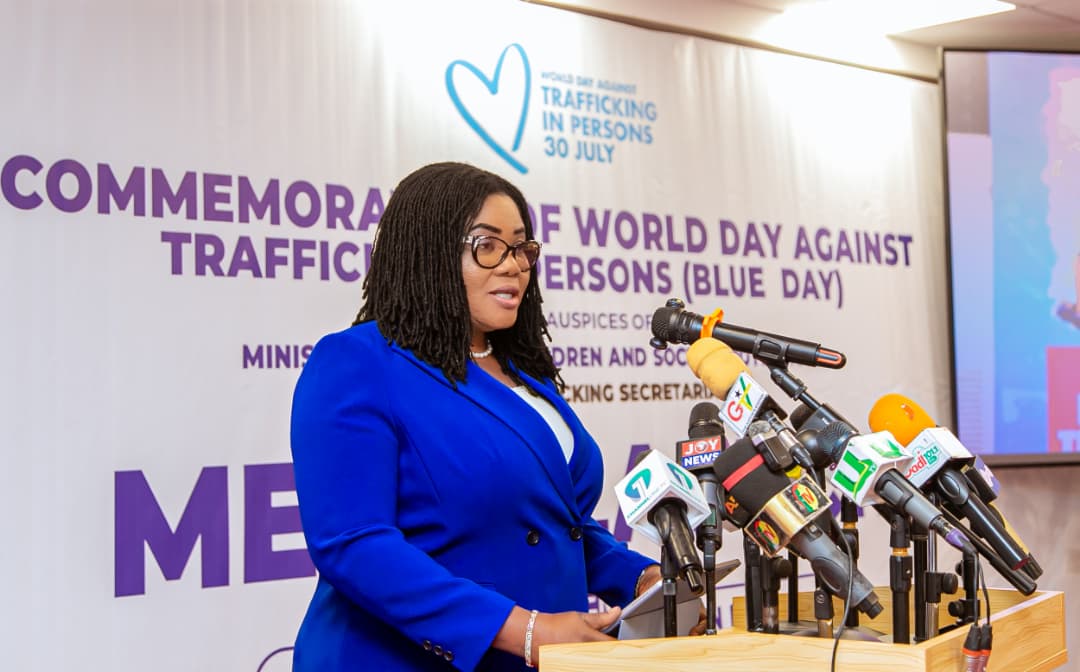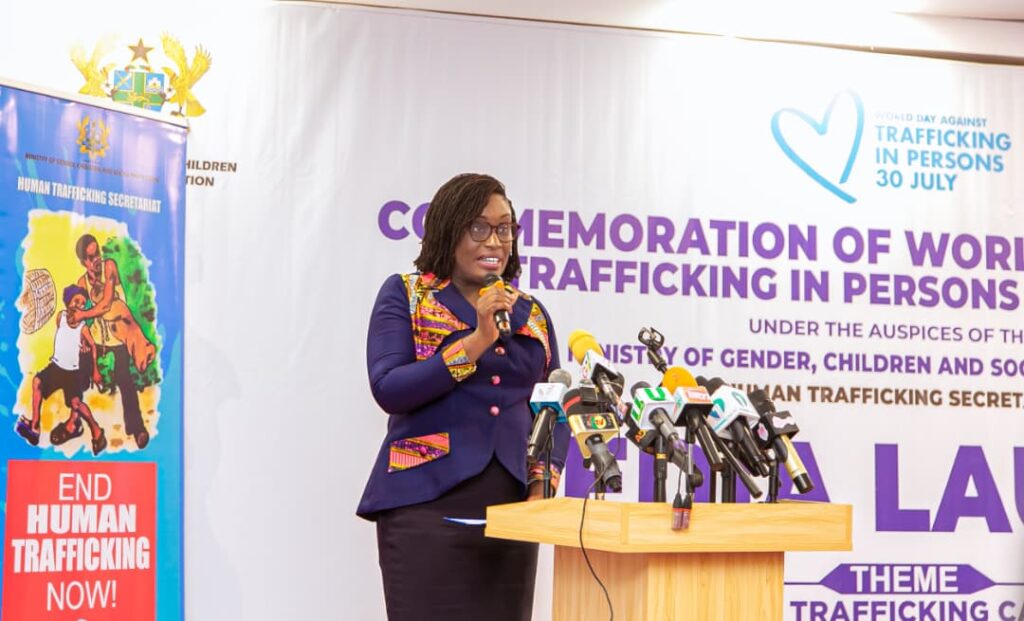
West Africa Director of International Justice Mission (IJM), Anita Budu
The West Africa Director of International Justice Mission (IJM), Anita Budu, has called for intensified national action, stronger partnerships and increased funding to combat human trafficking and child exploitation in Ghana and across the sub-region.
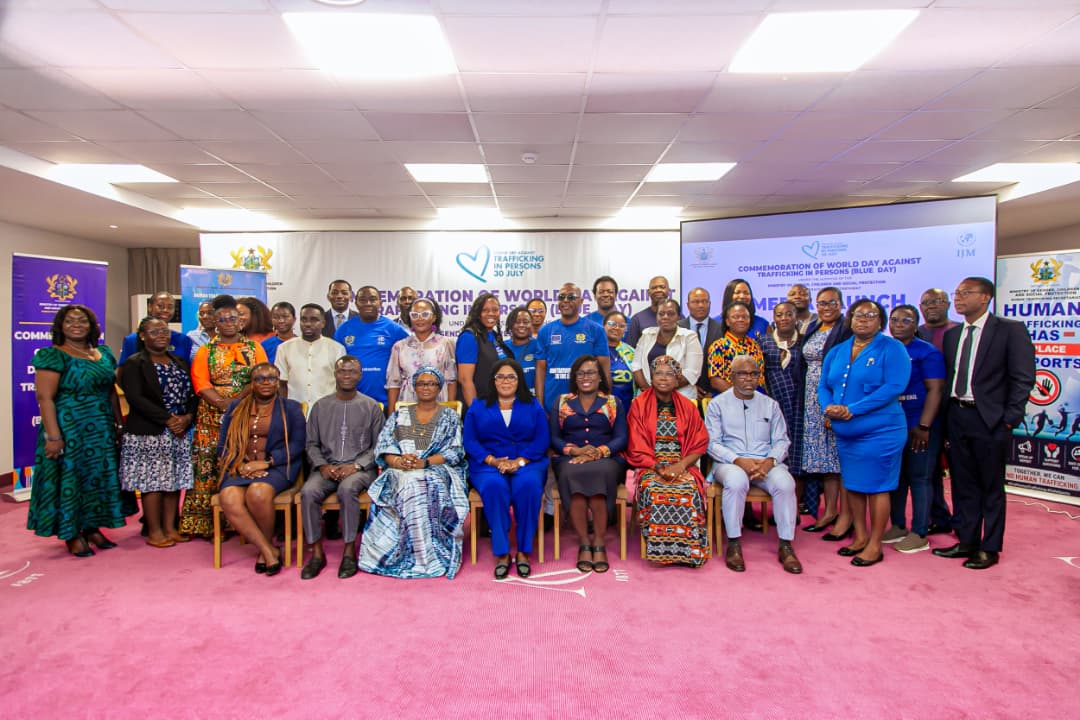
Speaking at the media launch of “Blue Day” ahead of the World Day Against Trafficking in Persons, Ms. Budu described human trafficking as a growing and sophisticated crime that continues to exploit vulnerable people, particularly through digital platforms and false job or sporting promises.
She noted that IJM, a global human rights organisation, is partnering with the Human Trafficking Secretariat to strengthen awareness and response efforts under this year’s theme: “Human Trafficking Can End: The Time is Now – Blow the Whistle on Sports Trafficking.”
According to her, recent incidents highlight the urgency of the fight against trafficking. She referenced a July 2025 report involving 76 young Ghanaians who were allegedly lured with promises of football contracts abroad, only to be trafficked through deception and exploitation.
“They believed they were stepping into a better future, but instead they were trapped, had their phones and documents seized, and were forced into exploitation,” she said.
She explained that the victims were recruited through social media platforms such as Facebook and WhatsApp, where traffickers used false promises of opportunities to deceive them.
Ms. Budu revealed that some of the victims were forced into cyber fraud, while others were compelled to demand money from their families under false pretences of training and processing fees.
She however commended the coordinated efforts of the Ghana Police Service, Interpol and Nigerian authorities, which led to the rescue and return of the victims, as well as arrests in connection with the case.
Despite these successes, she stressed that significant gaps remain in prevention, especially in monitoring recruitment processes and strengthening safeguards before victims leave the country.
Ms. Budu urged the media to play a frontline role in the fight against trafficking, describing journalists as “first responders to truth” whose reporting can break silence, educate the public and drive accountability.
She also called for increased funding for anti-trafficking interventions, particularly through the Human Trafficking Fund, to support prevention, law enforcement, prosecution and survivor rehabilitation.
According to her, effective action against trafficking requires sustained investment from government, development partners, institutions and individuals.
“Even the strongest systems cannot function without resources,” she cautioned.
Ms. Budu concluded that ending human trafficking requires collective effort, insisting that urgent action is needed to protect vulnerable people and ensure that no one is left behind.