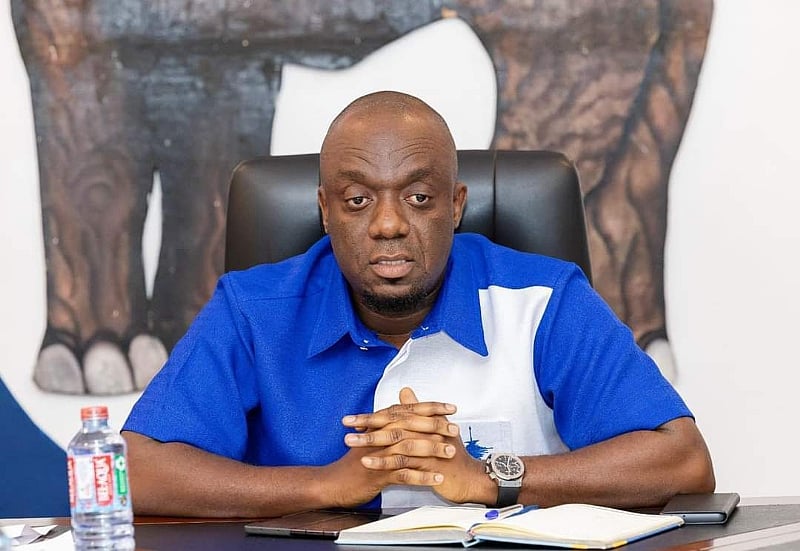
Tensions between the New Patriotic Party’s U.S. branch and party headquarters in Accra have boiled over, with members alleging that new election guidelines from General Secretary Justin Kodua Frimpong, Esq. strip voting rights from more than 600 dues-paying members while lowering the bar for others to contest office.
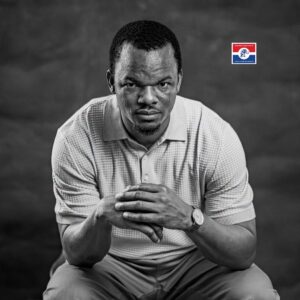
The backlash centers on two sets of directives issued for external branch elections. In an open letter now circulating widely in NPP-USA WhatsApp groups, Theophilus Nkansah, known as Senator Theo of the NPP Massachusetts Chapter, described the fallout as a “freight train” that hit the membership after the documents were released.
“Guidelines First, Questions Later”
According to the letter, the first set of guidelines issued by the General Secretary was “a copy-and-paste exercise lifted from domestic constituency rules” that contradicted NPP-USA’s bylaws and three decades of practice. After members across external branches raised concerns, Kodua Frimpong and the Director of External Affairs reportedly met with branch leaders to ask how their elections are run.
“They wrote the guidelines first. Then they asked how we run our elections,” the letter states. “That is not leadership. That is negligence dressed in a suit.”
The Revised Rules: Harder to Vote, Easier to Run
The second set of guidelines, approved at the party’s National Executive Committee meeting on April 8, 2026, made two changes that NPP-USA members say work in opposite directions.
First, the voting eligibility threshold was raised from one year of registered, good-standing membership to two years. Under NPP-USA’s bylaws and 2022 Election Guidelines, any member registered for at least one year who has paid all financial obligations is eligible to vote. The branch says 861 dues-paying members relied on that rule when they paid. The new threshold would disqualify over 600 of them — more than 70% of the branch’s card-bearing membership.
Second, the same revised document reduced the eligibility to contest for branch office from four years to two years.
“Read that one more time. The right to vote was made harder. The right to run for office was made easier. In the same document. By the same hand,” Senator Theo wrote.
Members argue the changes mean long-standing, dues-paying members are told they cannot vote, while individuals who joined two years ago — who “may never have organized a single event, never trained a single polling agent, never given a single dollar to a campaign” — are now qualified to lead.
“Taxation Without Representation”
The letter frames the dispute as a breach of the basic contract between the party and its members: “You cannot take people’s money and deny them their voice. That is taxation without representation.”
It states that NPP-USA accepted dues from the 600-plus members now affected, counted them on membership rolls, and used their numbers to show strength. “And now the Party is telling them: thank you for your money, but you do not get to vote.”
Members say the move guts the branch’s One-Member-One-Vote principle, which NPP-USA pioneered among external branches. “When you accept 861 people’s dues and then tell 600 of them that their votes do not count, you have not reformed a process. You have executed a democratic heist,” the letter reads.
Allegations of Double Standard
The letter also points to what it calls hypocrisy, citing recent radio interviews in Ghana where the General Secretary told the public that newly registered members would be eligible to vote in upcoming internal elections. “He said it on live radio… The message was unmistakable: join the party, pay your dues, and you will have a voice,” it states.
“But when it comes to NPP-USA — the branch that has funded campaigns since my youthful days, mobilized resources, adopted constituencies, and bled for this party from across the Atlantic — suddenly the rules are different.”
Who Benefits?
The letter alleges the revised guidelines create a pathway for “exactly four individuals” who do not meet the branch’s established four-year contesting requirement to suddenly qualify, while silencing “the very electorate that would have scrutinized those candidacies.”
“Over 600 voters removed. Four contestants were added. That is not coincidence. That is architecture,” it states. The letter adds that “whispers of inducement” between certain aspirants and the General Secretary’s office are growing, though it notes: “We are not in a position to verify them.”
Demands From NPP-USA
The letter lists four demands directed at party leadership:
1. *Withdraw or substantively revise* the guidelines for external branches through genuine consultation.
2. *Restore the one-year voting threshold* that has governed previous branch elections.
3. *Preserve the four-year contesting requirement* for branch office.
4. *A formal explanation* from the General Secretary on why the voting threshold was raised and the contesting threshold lowered in the same document.
It also calls for recognition that “the external branches are not a subsidiary to be managed from Accra. It is a pillar to be respected.”
“The Spine That Will Not Break”
The letter emphasizes NPP-USA’s history, saying it was built “in living rooms in Maryland, in church basements in New Jersey and New York, in rented halls in Atlanta, in the apartments of students in Ohio” by members who worked double shifts to organize and fundraise. It credits the branch with pioneering electronic voting and the “1 Constituency, 1 Chapter” diaspora model.
“The General Secretary of the New Patriotic Party, Mr. Justin Kodua Frimpong, Esq., cannot and will not break the spine of this Branch. Not today. Not tomorrow. Not ever,” the letter states.
It closes by rejecting the guidelines outright: “What is happening is not reform. It is demolition dressed as policy… The foundation of NPP-USA was laid with sacrifice. It was cemented with conviction… That foundation will hold. The Branch will not fall.”
As of publication, the Office of the General Secretary has not issued a public response to the allegations or the demands. With internal branch elections approaching, NPP-USA members say over 600 of their colleagues remain unsure whether they will be allowed to vote.